Last updated: June 2026
This post contains affiliate links. If you buy through them, we may earn a small commission at no extra cost to you. We only recommend plants and products we’d put in our own apartments.
Most lists of “the best plants for windowless rooms” are quietly lying to you. They include Aloe Vera (needs full sun), Monstera (needs bright indirect), and Bird’s Nest Fern (needs filtered light) on the same list as a ZZ plant — as if “tolerates low light” and “survives with zero natural light” are the same thing. They’re not.
This guide separates the survivors from the wishful thinking. We’ll cover the 10 plants that genuinely survive in windowless bathrooms, interior home offices, and basement apartments, with an honest darkness-limit table for each, pet-safety information, and a quick setup guide for the grow light that makes the whole project work. Because here’s the truth no one wants to say out loud: in a room with literally zero windows, a grow light isn’t optional — it’s the prerequisite. The plants below are the ones that hold up best until you get one in, and that thrive once you do.
The Honest Truth About “No-Window” Plants
Plants need light to make food. Period. A handful of species can coast on stored energy for weeks or months in a fully dark room, but none of them grow without light, and all of them eventually decline. The University of Maryland Extension is blunt about this: prolonged low-light conditions cause leggy growth, leaf drop, and eventual death — even for “low-light tolerant” species.
So what does “low light” actually mean? In a real windowless room, you’re typically looking at under 50 foot-candles of ambient light from overhead ceiling bulbs — well below the 75–200 foot-candle floor most houseplant care guides assume. That’s the gap competitor articles paper over.
You have three honest options:
- Add a grow light. Cheapest, easiest, and the only path to actual growth. A $20 LED bulb in a desk lamp on a 12-hour timer will keep nearly every plant on this list thriving.
- Rotate plants in and out. Keep two of each plant — one in the windowless room, one near a window. Swap every two weeks. Works, but takes discipline.
- Accept slow decline. Some plants (ZZ, snake plant, cast iron) hold for months on stored energy alone. They look great. Then one day they don’t. This is the path most no-window plant owners actually walk, often without realizing it.
Survival Limits in True Darkness: How Long Each Plant Actually Lasts
This is the table competitor articles skip. These are realistic ranges for a plant kept in a healthy state before being moved into a truly windowless room with only standard ceiling lighting (a single 60W LED bulb or two, on for a few hours a day).
| Plant | Survival in true darkness* | Thrives under LED grow light? | Bathroom-friendly? |
|---|---|---|---|
| ZZ Plant | Up to 4 months | Yes | OK (avoid soggy soil) |
| Cast Iron Plant | 3–4 months | Yes | OK |
| Snake Plant | 2–3 months | Yes | No (hates humidity) |
| Pothos | 1–2 months | Yes (vigorous) | Yes |
| Heartleaf Philodendron | 1–2 months | Yes | Yes |
| Chinese Evergreen | 4–6 weeks | Yes | Yes |
| Parlor Palm | 4–6 weeks | Yes | OK |
| Lucky Bamboo | 4–8 weeks | Yes | Yes |
| Peace Lily | 3–4 weeks | Yes | Excellent |
| Bird’s Nest Fern | 2–3 weeks | Yes (with humidity) | Yes (with grow light) |
*”True darkness” here means a windowless room with only typical residential ceiling lighting on a few hours per evening. Add a real grow light and every one of these plants does substantially better.
Setting Up Your “Fake Window”: The Grow Light You Actually Need
For most readers, the right answer is one $20–$30 full-spectrum LED bulb screwed into a lamp you already own, on a $10 outlet timer set to 12 hours a day. That single setup will keep any plant on this list happy in a bathroom, office cubicle, or basement apartment.
A few rules from the University of Missouri Extension’s lighting guide that survive contact with reality:
- 12–14 hours per day for foliage houseplants. Less and they’ll stretch; more and they’ll stress.
- 6–18 inches between the bulb and the leaves, depending on bulb wattage. Closer for clip-ons, farther for stronger bar lights.
- Full-spectrum white, not blurple. You’re going to be in the room — make it look like a room.
- Never 24/7. Plants do critical metabolic work in the dark. No exceptions.
If you want the full breakdown — wattages, form factors, six tested product picks — read our complete guide to the best grow lights for indoor plants for beginners. The 10-minute version of that post will save you from buying the wrong fixture.

The 10 Best Plants for Windowless Rooms
Picks below are ranked by ease and darkness tolerance. Each entry gives you the honest survival window, pet-safety status, humidity preference, and where to buy.
1. ZZ Plant (Zamioculcas zamiifolia) — The Longest Survivor
Darkness limit: Up to 4 months · Pet-safe? No — toxic to cats and dogs (ASPCA) · Humidity: Tolerant · Care difficulty: Very easy
The ZZ is the undisputed king of windowless rooms. Its underground rhizomes store water and carbohydrates so efficiently that the plant can coast for months on stored energy. Put one in a windowless basement office and it’ll still look photo-ready in October.
Caveats. ZZs hate wet feet — water only when the soil is bone-dry, and use a chunky, well-draining mix. And every part of the plant is toxic if chewed, so it’s a hard no for households with curious cats.
Shop ZZ Plant on The Sill | Shop ZZ Plant on Bloomscape
2. Snake Plant (Dracaena trifasciata) — The Bulletproof Pick
Darkness limit: 2–3 months · Pet-safe? No — mildly toxic to cats and dogs · Humidity: Low to medium (not for bathrooms) · Care difficulty: Very easy
Snake plants tolerate near-total neglect and look architectural doing it. Under an LED grow light, they’ll even produce new pups. But here’s the detail competitor articles miss: snake plants dislike high humidity and will rot in a steamy windowless bathroom. Reserve them for offices, bedrooms, and basement apartments — not bathrooms.
Shop Snake Plant on Costa Farms / Amazon | Shop Snake Plant on Bloomscape
3. Pothos (Golden, Marble Queen, Neon) — The Comeback Kid
Darkness limit: 1–2 months · Pet-safe? No — toxic to cats and dogs · Humidity: Loves humidity · Care difficulty: Very easy
Pothos won’t last as long as a ZZ in pure darkness, but it bounces back from neglect faster than any plant on this list. Add a grow light and it grows fast, trails beautifully, and tolerates being repotted, hacked back, and re-rooted in water without complaint. The Marble Queen variety holds variegation better than Golden under artificial light.
Shop Pothos on The Sill | Shop Pothos on Bloomscape
4. Chinese Evergreen (Aglaonema) — Color in the Dark
Darkness limit: 4–6 weeks · Pet-safe? No — toxic to cats and dogs · Humidity: Loves humidity · Care difficulty: Easy
If you want color without flowers, Aglaonema is your plant. The silver, pink, and red varieties hold their patterns under artificial light better than almost any other low-light plant. They love humidity, which makes them excellent windowless bathroom residents — provided you give them a grow light.
Shop Chinese Evergreen on The Sill
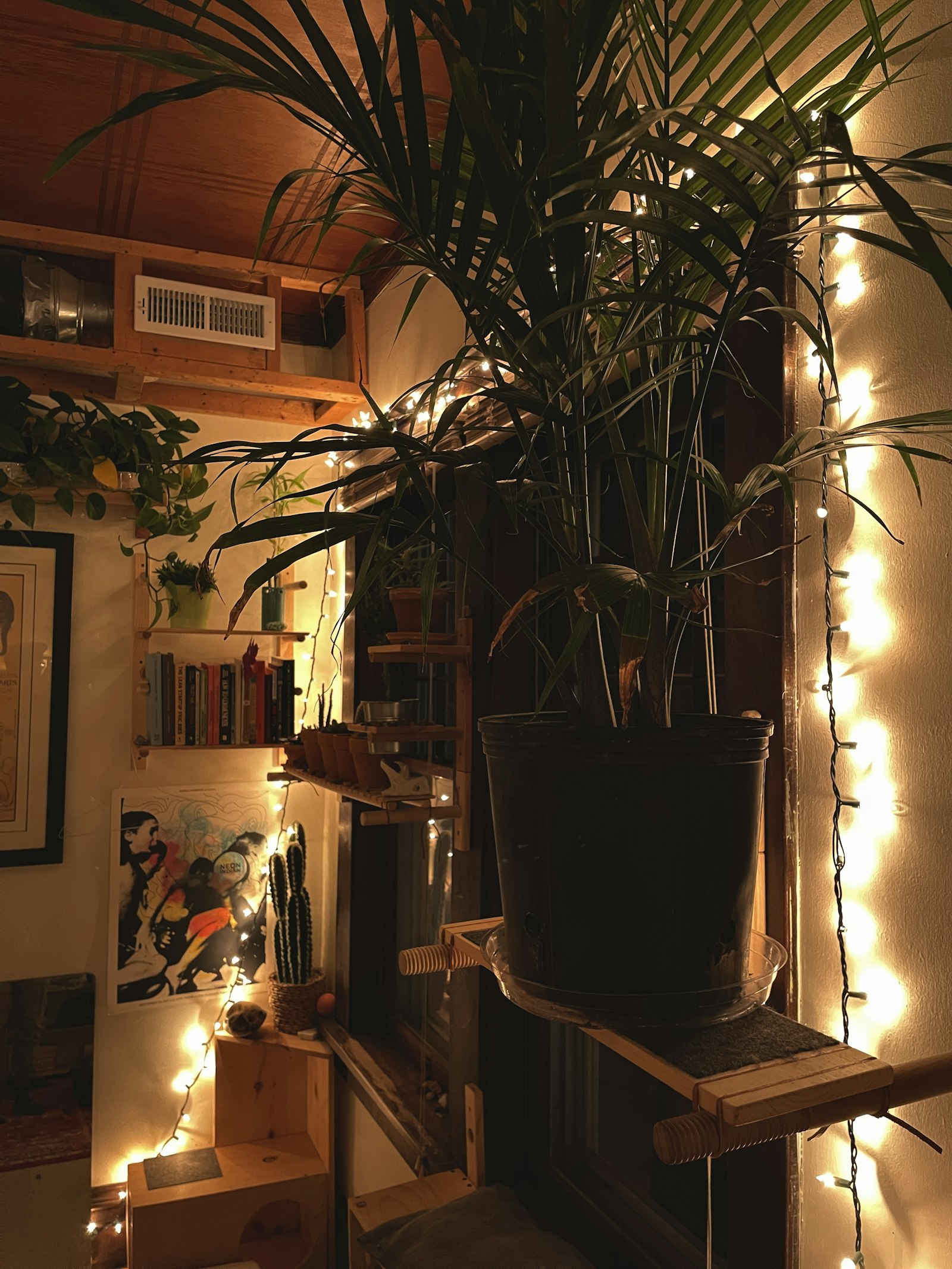
5. Parlor Palm (Chamaedorea elegans) — The Pet-Safe Statement Piece
Darkness limit: 4–6 weeks · Pet-safe? Yes — non-toxic to cats and dogs · Humidity: Loves humidity · Care difficulty: Easy
The parlor palm is the no-window plant for households with pets. It’s the only true palm that holds up under low light, it’s officially non-toxic per ASPCA, and it brings actual height to a corner. It grows slowly — even in good conditions — so set realistic expectations.
Shop Parlor Palm on Bloomscape
6. Peace Lily (Spathiphyllum) — The Bathroom Champion
Darkness limit: 3–4 weeks · Pet-safe? No — toxic to cats and dogs · Humidity: Loves humidity · Care difficulty: Easy
Peace lilies are practically engineered for windowless bathrooms. They thrive in humidity, signal thirst by dramatically drooping (a built-in watering reminder), and will produce white flowers under even modest grow-light setups. They will not flower in true darkness — flowers require light, full stop.
Shop Peace Lily on The Sill | Shop Peace Lily on Costa Farms / Amazon
7. Cast Iron Plant (Aspidistra elatior) — The Survivor
Darkness limit: 3–4 months · Pet-safe? Yes — non-toxic to cats and dogs · Humidity: Tolerant · Care difficulty: Very easy
Named “cast iron” for a reason. Aspidistra survived gas-lit Victorian parlors and will survive your basement apartment. It’s slow, deep green, and almost impossible to kill — handles dust, drafts, irregular watering, and dim lighting. Pet-safe, too. The only catch is availability: it’s harder to find than the rest of this list. Order ahead.
Shop Cast Iron Plant on Costa Farms / Amazon
8. Heartleaf Philodendron (Philodendron hederaceum) — The Trailing Workhorse
Darkness limit: 1–2 months · Pet-safe? No — toxic to cats and dogs · Humidity: Loves humidity · Care difficulty: Very easy
A close cousin of pothos with smaller, glossier heart-shaped leaves. Slightly more graceful, slightly more humidity-loving, equally indestructible under a grow light. Great for a windowless bathroom shelf where you want something cascading.
Shop Heartleaf Philodendron on The Sill
9. Lucky Bamboo (Dracaena sanderiana) — Grows in Water
Darkness limit: 4–8 weeks · Pet-safe? No — toxic to cats and dogs · Humidity: Tolerant · Care difficulty: Very easy
Technically not bamboo (it’s a Dracaena), and famously tolerant of fluorescent office lighting. Lucky bamboo grows in a glass of water, which makes it perfect for windowless office desks where soil isn’t practical. Change the water every 2–3 weeks and keep it out of direct cold air.
10. Bird’s Nest Fern (Asplenium nidus) — Humidity Specialist (Grow Light Required)
Darkness limit: 2–3 weeks · Pet-safe? Yes — non-toxic to cats and dogs · Humidity: Loves humidity · Care difficulty: Moderate
I’m including this with a giant honest asterisk. The Bird’s Nest Fern is on most “windowless bathroom” lists because it loves humidity — but it cannot survive in true darkness. With a real grow light running 12 hours a day in a humid windowless bathroom, it’s stunning. Without one, it’s a 3-week countdown. Buy with intent.
Shop Bird’s Nest Fern on The Sill
Best Plants by Room Type
Windowless Bathroom (Humid, Often Warm)
Bathrooms reward humidity-loving species. Top picks: Peace Lily, Pothos, Heartleaf Philodendron, Chinese Evergreen, Bird’s Nest Fern (with grow light). Avoid: Snake Plant — high humidity rots its roots from below.
A small clip-on grow light mounted above the toilet or beside the mirror, set to 12 hours, transforms a bathroom into one of the easiest plant rooms in the house. The constant humidity from showers does half the work for you.
Interior Home Office or Windowless Cubicle
Offices typically have cool ceiling fluorescents or LED panels — enough to keep snake plants and ZZs alive, not enough to make anything grow. Top picks: ZZ Plant, Snake Plant, Pothos, Lucky Bamboo, Cast Iron Plant.
If you’re allowed a small desk lamp, a single full-spectrum LED bulb on a 10-hour timer (off when you leave) makes a measurable difference within a month.
Basement Apartment or Interior Bedroom
Basements add a third challenge: cool temperatures. Top picks: Cast Iron Plant, Parlor Palm, ZZ Plant, Heartleaf Philodendron. Pair with a bar-style grow light over a shelf for the whole collection at once. If temperatures drop below 60°F at night, skip the tropicals and lean on Cast Iron and ZZ.
Pet-Safe Picks (and the Toxic Ones to Avoid)
If you have cats or dogs, this section matters. Confirmed non-toxic per the ASPCA database:
- Parlor Palm — the best pet-safe statement plant for windowless rooms
- Cast Iron Plant — the longest-lasting pet-safe option
- Bird’s Nest Fern — pet-safe and bathroom-friendly (but needs a grow light)
- Boston Fern — pet-safe, humidity-loving — works in a windowless bathroom with grow light
- African Violet — pet-safe, flowers under grow lights, compact
Toxic to cats and dogs (on this list): ZZ Plant, Snake Plant, Pothos, Chinese Evergreen, Peace Lily, Heartleaf Philodendron, Lucky Bamboo. They’re not “deadly” in the medical sense for most pets, but ingestion causes mouth irritation, drooling, vomiting, and discomfort. If your cat is a known plant chewer, stick to the pet-safe list above.
Care Routine for Plants in Artificial Light
The biggest killer of windowless-room plants isn’t darkness — it’s overwatering. Plants under reduced light use water 30–50% more slowly than the same plant on a sunny windowsill. Default to less.
Watering
Use the finger test, not a schedule. Push your finger 1–2 inches into the soil. Dry? Water. Damp? Wait. ZZs, snake plants, and cast iron should dry out completely between waterings. Peace lilies and ferns prefer consistently damp (never wet).
Soil
Use a well-draining indoor potting mix and amend with extra perlite for the drought-tolerant species. Our guide to the best potting mix for indoor plants for beginners breaks down which bag to buy for each plant on this list — short version: Miracle-Gro Indoor for the easy plants, FoxFarm Happy Frog with extra perlite for the humidity lovers.
Fertilizing
Plants under artificial light grow more slowly and need less fertilizer. Use half the label-recommended dose, monthly during spring and summer, and skip winter feeding entirely unless your grow light is running 14+ hours.
Cleaning the Leaves
Dust on leaves blocks light — and when light is already scarce, every photon matters. Wipe leaves with a damp microfiber cloth every 2–3 weeks. This single habit doubles light absorption in many homes.
Frequently Asked Questions
Can plants really survive in a room with no windows?
Some can — for a while. Plants like the ZZ plant, cast iron plant, and snake plant store enough energy in their roots to survive 2–4 months in true darkness without obvious damage. But none will grow without light, and all eventually decline. To keep any plant thriving long-term in a windowless room, you need a grow light running about 12 hours a day.
What is the best plant for a bathroom with no window?
The Peace Lily, hands-down. It thrives in humidity, signals thirst by drooping, and produces white flowers under modest grow-light setups. The Chinese Evergreen and Pothos are excellent runners-up. Avoid the Snake Plant in windowless bathrooms — it hates high humidity.
How long can plants survive without any natural light?
Depends entirely on the species. ZZ plants and cast iron plants hold for up to 4 months. Snake plants, 2–3 months. Pothos and philodendrons, 1–2 months. Ferns and palms, 2–6 weeks. After that, even the toughest plants begin to decline.
Which plants last longest in total darkness?
The ZZ plant and cast iron plant share the top spot — both can hold for 3–4 months in a truly dark room before showing obvious decline, thanks to their energy-storing rhizomes and rhizomatous root systems respectively. The snake plant comes in close behind at 2–3 months. No plant lasts indefinitely without light, but those three give you the most runway to get a grow light in place.
Can pothos survive in a windowless bathroom?
Yes — and it’s one of the better choices for a windowless bathroom specifically. Pothos loves humidity, tolerates the low light of a windowless space better than many trailing plants, and bounces back quickly once you add a grow light. It won’t last as long as a ZZ without any light (expect 1–2 months before decline), but under a modest LED grow light running 12 hours a day it will thrive and trail beautifully. Note that pothos is toxic to cats and dogs — if you have pets, consider the parlor palm or bird’s nest fern instead.
Do I need a grow light for a windowless room?
For more than a few months, yes. A standard 60W LED ceiling bulb gives off virtually no usable plant light. A $20–$30 full-spectrum LED grow bulb on a 12-hour timer changes the entire equation. Our complete grow-light buying guide walks through six tested picks under $80.
Will a regular LED bulb work instead of a grow light?
Barely. Regular LED bulbs produce some of the wavelengths plants need but at very low intensity. In a windowless room, a regular bulb will slow decline but not stop it. A purpose-built grow bulb costs $15–$30 and goes in the same socket — there’s no good reason to skip the upgrade.
Are there pet-safe plants for windowless rooms?
Yes. The Parlor Palm, Cast Iron Plant, Bird’s Nest Fern, Boston Fern, and African Violet are all confirmed non-toxic per the ASPCA. Avoid ZZ plants, Snake Plants, Pothos, Philodendrons, Peace Lilies, and Chinese Evergreens in homes with chewing pets.
How many hours of artificial light do plants need?
For foliage houseplants in a windowless room, aim for 12–14 hours per day of full-spectrum LED light. Herbs and flowering plants prefer 14–16 hours. Always include 8+ hours of darkness — plants do essential metabolic work at night.
Can I rotate plants in and out of a dark room?
Yes, and it works well. Keep two of each plant — one near a window, one in the windowless space — and swap every 1–2 weeks. This is a great low-cost alternative to a grow light if you already have a brighter room available.
Got a windowless-room plant question this guide didn’t answer? Drop it in the comments and we’ll add it to the FAQ.